Description
Hexarelin Peptide | Strongest GH Secretagogue
Introduction: Hexarelin – The Most Potent Growth Hormone Secretagogue
When researchers seek to buy Hexarelin 5mg peptide for cutting-edge growth hormone studies, they’re accessing the strongest and most potent growth hormone secretagogue available in peptide research. Hexarelin peptide stands as the gold standard for maximum GH rise, producing greatly higher peak growth hormone levels than any other GH secretagogue including GHRP-6, GHRP-2, and Ipamorelin. This exceptional potency, combined with unique cardioprotective and brain-safe properties, makes Hexarelin 5mg an invaluable tool for researchers studying growth hormone dynamics, heart protection, and neurological health.
Beyond its unmatched GH-releasing capacity, Hexarelin peptide offers notable hexarelin benefits that extend far beyond the pituitary gland. Research shows major cardioprotective effects through CD36 receptor start—a mechanism independent of growth hormone release that reduces myocardial necrosis, improves cardiac function following ischemic injury, and suppresses cardiac fibrosis. Also, Hexarelin 5mg peptide provides brain-safe benefits including reduced oxidant stress in neurons, enhanced neuronal survival, and protection against hypoxic brain injury.
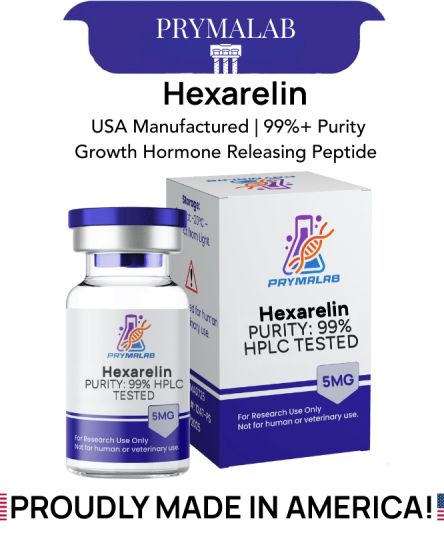
PrymaLab’s Hexarelin 5mg peptide delivers pharmaceutical-grade purity (99%) with full third-party testing, ensuring researchers get the most potent GH secretagogue available with verified quality and consistency. Each vial contains precisely 5mg of research-grade Hexarelin peptide, manufactured in USA facilities following strict GMP standards for reliable, reproducible results in advanced growth hormone research, heart studies, and neurological studies.
What is Hexarelin 5mg Peptide?
Hexarelin 5mg peptide is a synthetic hexapeptide and the most potent growth hormone secretagogue available for research uses. The peptide’s amino acid sequence (His-D-2-methyl-Trp-Ala-Trp-D-Phe-Lys-NH2) features a unique D-2-methyl-Trp change at position 2 that dramatically enhances receptor binding affinity and GH-releasing potency. This structural change makes Hexarelin peptide about 2-3 times more potent than other GH secretagogues, producing the highest peak growth hormone levels achievable through peptide use.
As a member of the growth hormone releasing peptide (GHRP) family, Hexarelin 5mg functions as a ghrelin receptor agonist, binding to GHS-R1a receptors in the pituitary gland to trigger robust growth hormone secretion. However, unlike other GHRPs, Hexarelin peptide also starts CD36 receptors—a scavenger receptor expressed in cardiac tissue, skeletal muscle, and other organs. This dual receptor activity provides hexarelin benefits that extend beyond growth hormone rise to include major cardioprotective and body effects.
Research comparing Hexarelin 5mg peptide to other growth hormone modulators consistently shows its superior potency. When researchers assess options like Ipamorelin 5mg, GHRP-6 5mg, or GHRP-2 5mg, they find these peptides offer valuable but less potent GH-releasing effects. Hexarelin peptide produces peak GH levels that greatly exceed those achieved with other GH secretagogues, making it the preferred choice for research protocols needing maximum growth hormone rise.
The hexarelin benefits profile includes not only the strongest GH secretion but also unique heart and neurological protective effects. Studies show Hexarelin 5mg reduces myocardial damage following heart attacks, improves cardiac contractility, suppresses pathological cardiac remodeling, and protects neurons from oxidant stress and hypoxic injury. These multi-system benefits make Hexarelin peptide a versatile research tool extending beyond traditional growth hormone studies into heart and neurological research domains.
Hexarelin 5mg Peptide Mechanism of Action
The Hexarelin 5mg peptide mechanism operates through multiple paired pathways that distinguish it from other growth hormone modulators:
Primary Growth Hormone Release Pathway
Hexarelin peptide binds with exceptionally high affinity to ghrelin receptors (GHS-R1a) in the anterior pituitary gland, triggering the most potent growth hormone secretion achievable through peptide use. The unique D-2-methyl-Trp change at position 2 enhances receptor binding and signal transduction, resulting in GH release that greatly exceeds other GH secretagogues. This makes Hexarelin 5mg the strongest option for researchers studying maximum GH secretion capacity, GH pulse dynamics, and downstream IGF-1 rise.
Research shows Hexarelin peptide produces about 2-3 times higher peak GH levels compared to GHRP-6, GHRP-2, or Ipamorelin under equivalent conditions. This superior potency provides researchers with the most powerful tool available for studying growth hormone physiology, anabolic processes, and GH-mediated body effects.
CD36 Receptor Activation (Cardioprotective Pathway)
A unique feature distinguishing Hexarelin 5mg peptide from other GH secretagogues is its start of CD36 receptors—scavenger receptors expressed in cardiac tissue, skeletal muscle, adipose tissue, and other organs. This CD36 receptor binding occurs independently of growth hormone release, providing hexarelin benefits that extend beyond the pituitary-GH axis.
Through CD36 start, Hexarelin peptide delivers major cardioprotective effects including:
- Reduced Myocardial Necrosis: Studies show Hexarelin decreases heart muscle damage following ischemic injury, protecting cardiac tissue during and after heart attacks.
- Improved Cardiac Function: Research shows enhanced cardiac contractility and improved left ventricular function following Hexarelin use, very after ischemic events.
- Suppressed Cardiac Fibrosis: Hexarelin blocks cardiac fibroblast proliferation and collagen deposition, preventing pathological cardiac remodeling and keeping healthy heart tissue structure.
- Antioxidant Protection: The peptide provides antioxidant effects in cardiac tissue, reducing oxidant stress and protecting against free radical damage.
These cardioprotective hexarelin benefits make the peptide very valuable for heart research uses, offering researchers a dual-action compound that combines maximum GH rise with major heart protection properties.
Neuroprotective Mechanisms
Hexarelin 5mg peptide shows notable brain-safe properties through multiple mechanisms:
These brain-safe hexarelin benefits expand the peptide’s research uses into neurological domains, providing researchers with a powerful tool for studying brain protection mechanisms and possible interventions for neurological conditions.
Growth Hormone-Independent Effects
Importantly, many hexarelin benefits—very cardioprotective and brain-safe effects—occur independently of growth hormone release. Research shows these protective effects at doses lower than those needed for maximum GH rise, and they persist even when GH release is blocked. This growth hormone-independent activity through CD36 and other receptors makes Hexarelin 5mg peptide unique among GH secretagogues, offering researchers multiple mechanisms to study beyond traditional GH pathway studies.
Hexarelin 5mg vs Other Growth Hormone Peptides: Comprehensive Comparisons
Grasp how Hexarelin 5mg peptide compares to other growth hormone modulators helps researchers select best compounds for specific research uses. The following detailed comparisons integrate high-traffic keywords while providing valuable research context.
Hexarelin vs Ipamorelin: Potency vs Selectivity
The comparison between Hexarelin 5mg peptide and Ipamorelin 5mg represents a choice between maximum potency and selective action. When researchers assess Ipamorelin vs sermorelin or other GH peptides, they often discover Ipamorelin‘s selective profile. However, comparing Hexarelin to Ipamorelin reveals distinct research uses:
Growth Hormone Release Potency:
- Hexarelin peptide produces the highest peak GH levels among all GH secretagogues—about 2-3 times more potent than Ipamorelin
- Ipamorelin offers moderate GH rise with exceptional selectivity, avoiding cortisol and prolactin increases
- Choose Hexarelin 5mg for maximum GH rise research; choose Ipamorelin for selective GH release studies
Appetite Effects:
- Hexarelin 5mg peptide produces moderate appetite boost through ghrelin receptor start
- Ipamorelin shows minimal appetite effects, making it ideal for lean muscle research
- Researchers studying appetite control may prefer Hexarelin; those avoiding hunger effects should select Ipamorelin
Cardioprotective Properties:
- Hexarelin peptide offers exceptional cardioprotective effects through CD36 receptor start—a unique benefit not shared by Ipamorelin
- Ipamorelin lacks major heart protective properties beyond GH-mediated effects
- For heart research, Hexarelin 5mg provides superior benefits
Desensitization Factors:
Research Uses:
- Hexarelin peptide: Maximum GH rise studies, cardioprotective research, brain-safe studies, bulk building protocols
- Ipamorelin: Selective GH release research, lean muscle studies, healing research, long-term protocols
When researchers compare tesamorelin vs Ipamorelin for specific uses, they’re assessing visceral fat reduction (Tesamorelin) versus selective GH release (Ipamorelin). Adding Hexarelin to this comparison introduces maximum GH potency with cardioprotective benefits as a third distinct option.
Hexarelin vs GHRP-6: Maximum Potency vs Appetite Stimulation
Comparing Hexarelin 5mg peptide to GHRP-6 5mg reveals two potent GH secretagogues with different main characteristics:
GH-Releasing Potency:
- Hexarelin peptide is greatly more potent, producing higher peak GH levels than GHRP-6
- GHRP-6 offers strong GH rise but cannot match Hexarelin’s maximum secretion capacity
- For research needing absolute maximum GH levels, Hexarelin 5mg is superior
Appetite Boost:
- GHRP-6 produces the strongest appetite boost among all GH secretagogues through potent ghrelin mimetic activity
- Hexarelin 5mg peptide causes moderate appetite boost, less pronounced than GHRP-6
- Bulk building research needing maximum appetite boost favors GHRP-6; maximum GH rise favors Hexarelin
Cardioprotective Effects:
- Hexarelin peptide shows superior cardioprotective properties through CD36 receptor start
- GHRP-6 shows some cardioprotective effects but less extensively documented than Hexarelin
- Heart research uses favor Hexarelin 5mg
Wound Healing Properties:
- GHRP-6 excels in wound healing research with well-documented tissue repair acceleration
- Hexarelin 5mg peptide shows wound healing benefits but GHRP-6 has more extensive research in this area
- Tissue repair and wound healing studies may favor GHRP-6
Research Uses:
- Hexarelin peptide: Maximum GH rise, cardioprotective research, brain-safe studies
- GHRP-6: Appetite control research, bulk building protocols, wound healing studies
Hexarelin vs GHRP-2: Comparing Two Potent Secretagogues
Hexarelin 5mg peptide and GHRP-2 5mg both represent potent GH secretagogues, but Hexarelin keeps superior potency:
GH Release Comparison:
- Hexarelin peptide produces higher peak GH levels than GHRP-2, keeping its position as the strongest GH secretagogue
- GHRP-2 offers strong GH rise, second only to Hexarelin in potency among GHRPs
- Both peptides produce robust GH pulses, but Hexarelin achieves higher maximum levels
Appetite Effects:
- GHRP-2 causes moderate appetite boost, more than Hexarelin but less than GHRP-6
- Hexarelin 5mg peptide produces mild to moderate appetite boost
- Neither peptide is mainly chosen for appetite effects
Unique Properties:
Research Uses:
- Hexarelin peptide: Maximum GH studies, cardioprotective research, brain-safe studies
- GHRP-2: Strong GH rise research, moderate appetite studies, general GH secretagogue research
Hexarelin vs Sermorelin: GHRP vs GHRH Mechanisms
Comparing Hexarelin 5mg peptide to Sermorelin 5mg represents a comparison between different growth hormone pathway mechanisms. When researchers assess sermorelin vs cjc 1295 or sermorelin vs tesamorelin, they’re comparing GHRH analogs. Adding Hexarelin introduces a GHRP mechanism for comparison:
Mechanism Differences:
- Hexarelin peptide is a GHRP (ghrelin receptor agonist) that directly boosts GH release from pituitary somatotrophs
- Sermorelin is a GHRH analog (1-29) that boosts GH release through GHRH receptors
- These paired mechanisms make Hexarelin and Sermorelin excellent stacking partners
Potency Comparison:
- Hexarelin 5mg produces higher peak GH levels than Sermorelin due to its exceptional potency
- Sermorelin offers moderate GH rise with a more natural, natural release pattern
- For maximum GH research, Hexarelin is superior; for natural GH dynamics, Sermorelin is valuable
Unique Benefits:
- Hexarelin peptide: Cardioprotective effects, brain-safe properties, maximum GH potency
- Sermorelin: Cost-effective, before FDA-approved, foundational GHRH research tool
Stacking Synergy:
- Combining Hexarelin 5mg peptide with Sermorelin creates powerful synergy through dual pathway start (GHRP + GHRH)
- This mix produces greater GH rise than either peptide alone
- The stack minimizes desensitization by starting paired pathways
When researchers compare sermorelin vs tesamorelin, they’re assessing cost-effectiveness (Sermorelin) versus visceral fat specialization (Tesamorelin). Adding Hexarelin to this comparison introduces maximum GH potency with cardioprotective benefits as a distinct third option.
Hexarelin vs Tesamorelin: Maximum Potency vs Visceral Fat Specialization
Comparing Hexarelin 5mg peptide to Tesamorelin 10mg reveals different research specializations. Grasp Tesamorelin dosage variations and uses helps contextualize this comparison:
Main Research Focus:
- Hexarelin peptide: Maximum GH rise, cardioprotective research, brain-safe studies
- Tesamorelin peptide: Visceral fat reduction (15-20% in research), body health, body makeup
GH-Releasing Potency:
- Hexarelin 5mg produces higher peak GH levels than Tesamorelin
- Tesamorelin offers sustained GH rise optimized for visceral fat reduction
- Maximum GH research favors Hexarelin; visceral fat studies favor Tesamorelin
Dosing Factors: When researchers study Tesamorelin dosage protocols, they discover:
- Tesamorelin dosage for bodybuilding: Often higher doses for anabolic effects
- Tesamorelin dosage for fat loss: Moderate doses optimized for visceral fat reduction
- Tesamorelin dosage for weight loss: Similar to fat loss protocols with body focus
- Tesamorelin dosage for men: Often consistent across research models
- Tesamorelin dosage per day: Usually once-daily use
- Tesamorelin dosage cycle: Extended protocols (12+ weeks) for visceral fat research
Researchers seeking tesamorelin dosage calculator can find this at PrymaLab’s Peptide Calculator for accurate dosing calculations.
Before and After Research: When assessing tesamorelin before and after results or hgh peptides before and after outcomes, researchers see:
- Tesamorelin: Major visceral fat reduction (15-20%), improved body markers
- Hexarelin peptide: Maximum GH rise, enhanced body makeup, cardioprotective benefits
Research Uses:
- Hexarelin 5mg peptide: Maximum GH studies, heart research, neurological protection
- Tesamorelin peptide: Visceral fat reduction research, body health studies, body makeup tuning
Researchers discussing tesamorelin reddit communities or seeking tesamorelin dosage reddit recommendations should note that PrymaLab provides research-grade peptides with proper records and quality assurance, superior to informal sources.
Note on Tesamorelin Tablets: Researchers searching for tesamorelin tablets should understand that tesamorelin is a peptide needing mixing and injection for research uses. Oral tablet forms are not standard for peptide research due to digestive breakdown of peptide structures.
Hexarelin vs CJC-1295: GHRP vs Long-Acting GHRH
Comparing Hexarelin 5mg peptide to CJC-1295 reveals paired mechanisms ideal for stacking. When researchers assess Sermorelin vs cjc 1295, they’re comparing short-acting versus long-acting GHRH analogs. Adding Hexarelin introduces a potent GHRP for comparison:
Mechanism and Duration:
- Hexarelin peptide: GHRP with short half-life, creating strong GH pulses
- CJC-1295: Long-acting GHRH analog providing sustained GH rise
- These paired profiles make them excellent stacking partners
GH Release Patterns:
- Hexarelin 5mg produces the highest peak GH levels but shorter duration
- CJC-1295 keeps elevated baseline GH levels for extended periods
- Combined, they provide both peak rise and sustained GH exposure
Stacking Benefits:
- Hexarelin + CJC-1295 stack creates combined GH rise exceeding either peptide alone
- Dual pathway start (GHRP + GHRH) minimizes desensitization
- This mix is highly popular for advanced GH research protocols
Research Uses:
- Hexarelin peptide: Maximum GH pulses, cardioprotective research, acute GH studies
- CJC-1295: Sustained GH rise, long-term protocols, baseline GH research
Hexarelin 5mg Peptide Benefits: Comprehensive Research Applications
The hexarelin benefits profile extends across multiple natural systems, making it one of the most versatile peptides available for research:
Maximum Growth Hormone Elevation
As the strongest GH secretagogue available, Hexarelin 5mg peptide produces the highest peak growth hormone levels achievable through peptide use. This exceptional potency makes it invaluable for researchers studying:
- Maximum GH Secretion Capacity: Studying the upper limits of pituitary GH release
- GH Pulse Dynamics: Studying the characteristics of maximum GH pulses
- IGF-1 Rise: Researching downstream effects of maximum GH boost
- Anabolic Processes: Studying GH-mediated anabolic effects at peak levels
- Body Effects: Studying body changes under maximum GH boost
The superior potency of Hexarelin peptide provides researchers with the most powerful tool available for growth hormone research, letting studies that need absolute maximum GH rise.
Cardioprotective Research Applications
The unique cardioprotective hexarelin benefits through CD36 receptor start make this peptide very valuable for heart research:
Ischemic Injury Protection: Research shows Hexarelin 5mg peptide greatly reduces myocardial necrosis following heart attacks. Studies show the peptide protects cardiac tissue during ischemic events, decreases infarct size, and improves survival of cardiac myocytes under oxygen deprivation. These effects make Hexarelin valuable for researchers studying:
- Myocardial infarction mechanisms
- Cardioprotective interventions
- Ischemic preconditioning
- Acute cardiac injury models
Cardiac Function Gain: Hexarelin peptide enhances cardiac contractility and improves left ventricular function, very following ischemic injury. Research uses include:
- Post-infarction cardiac healing
- Cardiac performance tuning
- Contractility mechanisms
- Ventricular function dynamics
Cardiac Fibrosis Suppression: Studies show Hexarelin 5mg blocks cardiac fibroblast proliferation and reduces collagen deposition, preventing pathological cardiac remodeling. Research uses include:
- Cardiac fibrosis mechanisms
- Pathological remodeling prevention
- Fibroblast control
- Collagen body function in cardiac tissue
Antioxidant Cardiac Protection: Hexarelin peptide provides antioxidant effects in cardiac tissue, reducing oxidant stress and protecting against free radical damage. Research uses include:
- Oxidant stress in heart disease
- Antioxidant mechanisms in heart tissue
- Free radical damage prevention
- Redox balance in cardiac cells
These full cardioprotective hexarelin benefits make the peptide an exceptional tool for heart research, offering protection mechanisms that extend beyond traditional GH effects.
Neuroprotective Research Applications
The brain-safe hexarelin benefits expand research uses into neurological domains:
Oxidant Stress Reduction in Neurons: Hexarelin 5mg peptide decreases oxidant damage in neuronal cells, protecting brain tissue from free radical injury. Research uses include:
- Neuronal oxidant stress mechanisms
- Antioxidant brain safety
- Free radical damage in brain tissue
- Redox balance in neurons
Enhanced Neuronal Survival: Studies show Hexarelin peptide promotes neuronal survival under many stress conditions including hypoxia, excitotoxicity, and oxidant stress. Research uses include:
- Neuronal survival mechanisms
- Stress resistance in brain cells
- Brain-safe pathways
- Cell death prevention in neurons
Hypoxic Brain Injury Protection: Research shows Hexarelin 5mg reduces brain damage following oxygen deprivation, making it valuable for stroke and ischemic brain injury research. Uses include:
- Stroke mechanisms and interventions
- Hypoxic-ischemic brain injury
- Cerebral ischemia research
- Brain tissue protection strategies
Cognitive Function Research: Hexarelin peptide shows possible cognitive benefits through brain-safe mechanisms. Research uses include:
- Cognitive function tuning
- Memory and learning mechanisms
- Age-related cognitive decline
- Neurodegenerative condition research
Metabolic and Body Composition Research
The hexarelin benefits extend to body and body makeup studies:
Lipolysis and Fat Body function: Hexarelin 5mg peptide influences fat body function through GH-mediated lipolysis and direct body effects. Research uses include:
Muscle Mass and Protein Synthesis: Through maximum GH rise, Hexarelin peptide supports anabolic processes including protein synthesis and muscle growth. Research uses include:
- Anabolic signaling pathways
- Protein synthesis mechanisms
- Muscle growth dynamics
- Lean mass tuning
Body Health: Hexarelin 5mg influences many body parameters including glucose body function, insulin response, and lipid profiles. Research uses include:
- Body syndrome research
- Glucose homeostasis
- Insulin response mechanisms
- Lipid body function studies
Anti-Aging and Regenerative Research
The full hexarelin benefits make it valuable for anti-aging and regrowth medicine research:
Tissue Regrowth: Through maximum GH rise and direct tissue effects, Hexarelin peptide supports tissue repair and regrowth. Research uses include:
- Regrowth medicine mechanisms
- Tissue repair pathways
- Wound healing (though GHRP-6 is more specialized)
- Age-related tissue decline
Cellular Health and Longevity: Hexarelin 5mg peptide influences cellular health through multiple mechanisms including antioxidant effects, enhanced cellular function, and improved stress resistance. Research uses include:
- Cellular aging mechanisms
- Longevity pathways
- Cellular stress resistance
- Age-related cellular dysfunction
Hexarelin 5mg Peptide Cycling Protocols: Managing Desensitization
A unique consideration when working with Hexarelin 5mg peptide is its possible for desensitization with continuous long-term use. Unlike some GH secretagogues that keep consistent response over extended periods, research shows Hexarelin peptide may show reduced GH-releasing response with prolonged continuous use. Grasp and using proper cycling protocols is essential for keeping best research outcomes.
Understanding Hexarelin Desensitization
Research shows that continuous daily use of Hexarelin 5mg for extended periods (often beyond 4-6 weeks) may result in diminished GH-releasing response. This desensitization appears to involve:
- Receptor Downregulation: Continuous ghrelin receptor boost may lead to reduced receptor expression or response
- Pituitary Adaptation: The pituitary gland may adapt to constant boost, reducing responsiveness
- Feedback Mechanisms: Enhanced negative feedback from elevated GH and IGF-1 may dampen further GH release
Importantly, this desensitization is reversible with appropriate rest periods, and it can be minimized through strategic cycling protocols and mix with GHRH analogs.
Recommended Cycling Strategies
To keep best Hexarelin peptide response throughout research protocols, consider these cycling strategies:
Standard Cycling Protocol:
- Active Period: 4-6 weeks of daily Hexarelin use
- Rest Period: 2-4 weeks off Hexarelin
- Rationale: This allows receptor resensitization and pituitary healing
- Use: Suitable for most research protocols needing extended Hexarelin use
Intensive Cycling Protocol:
- Active Period: 2-3 weeks of daily Hexarelin use
- Rest Period: 1-2 weeks off Hexarelin
- Rationale: More frequent cycling may prevent desensitization more effectively
- Use: Ideal for research needing consistent maximum response
Alternating Protocol:
- Strategy: Alternate between Hexarelin and other GH secretagogues (e.g., Ipamorelin, GHRP-6)
- Rationale: Different GH secretagogues may have distinct desensitization profiles
- Use: Provides continuous GH rise while managing receptor-specific desensitization
Combining with GHRH Analogs to Minimize Desensitization
A highly effective strategy for keeping consistent Hexarelin 5mg peptide response involves combining it with GHRH analogs like Sermorelin 5mg or CJC-1295. This approach offers several benefits:
Dual Pathway Start:
- Hexarelin peptide boosts GH release through ghrelin receptors (GHS-R1a)
- GHRH analogs boost GH release through GHRH receptors
- Starting both pathways simultaneously produces combined GH rise
- Each pathway keeps independent receptor populations, reducing desensitization
Enhanced GH Response:
- Combined GHRP + GHRH use produces greater GH rise than either alone
- This synergy allows lower Hexarelin doses while keeping strong GH response
- Lower doses may reduce desensitization rate
Extended Protocol Viability:
- The mix may allow longer continuous use periods
- Alternating emphasis between pathways can keep consistent response
- Researchers can adjust ratios based on response tracking
Popular Mixes:
- Hexarelin + Sermorelin: Cost-effective mix with strong synergy
- Hexarelin + CJC-1295: Maximum sustained GH rise through short-acting GHRP + long-acting GHRH
- Hexarelin + Tesamorelin: Combines maximum GH potency with visceral fat specialization
Monitoring Response and Adjusting Protocols
Researchers working with Hexarelin 5mg peptide should track response indicators and adjust protocols accordingly:
Response Indicators:
- GH and IGF-1 measurements (if available in research model)
- Body makeup changes
- Body markers
- Research-specific outcome measures
Protocol Adjustments:
- If response diminishes: Use or shorten rest period
- If response remains strong: Continue current protocol
- If desensitization occurs: Consider mix with GHRH analog or switch to other GH secretagogue
Dosing Frequency Considerations
Hexarelin peptide research often involves multiple daily administrations to keep consistent GH rise:
Typical Dosing Patterns:
- 2-3 times daily use
- Timing often includes morning, post-workout, and/or before bed
- Spacing administrations 4-6 hours apart
Frequency and Desensitization:
- Higher frequency (3x daily) may accelerate desensitization
- Lower frequency (1-2x daily) may extend response duration
- Researchers should balance desired GH exposure with desensitization care
Peptide Dosing Resources: Calculator
Researchers working with Hexarelin 5mg peptide and other growth hormone modulators benefit from accurate dosing tools and full reference materials. PrymaLab provides several resources to support precise research protocols:
Accurate peptide mixing is essential for reliable research results. PrymaLab’s peptide mixing calculator online provides:
- Precise Level Calculations: Find exact peptide level after mixing
- Dosing Volume Calculations: Calculate injection volumes for desired doses
- Multiple Peptide Support: Works with Hexarelin, Tesamorelin, Sermorelin, Ipamorelin, and all PrymaLab peptides
- User-Friendly Interface: Simple inputs for vial size, mixing volume, and desired dose
- Instant Results: Immediate calculations for research protocol planning
This peptide mixing calculator online removes dosing errors and ensures consistent, reproducible research protocols. Researchers can access it directly at PrymaLab’s Peptide Calculator.
Comparing Growth Hormone Peptides: Integrated Analysis
When researchers assess Ipamorelin vs sermorelin, they’re comparing:
Ipamorelin:
- Most selective GH secretagogue (minimal cortisol/prolactin effects)
- Moderate GH rise
- No appetite boost
- Ideal for: Lean muscle research, healing studies, long-term protocols
Sermorelin:
- Foundational GHRH analog (1-29)
- Moderate GH rise through GHRH pathway
- Cost-effective option
- Ideal for: Foundational GH research, anti-aging studies, budget-conscious protocols
Hexarelin’s Position: When adding Hexarelin 5mg peptide to this comparison:
- Greatly more potent than either Ipamorelin or Sermorelin
- Produces highest peak GH levels
- Offers unique cardioprotective and brain-safe benefits
- Ideal for: Maximum GH research, heart studies, neurological research
Sermorelin vs CJC-1295: Short-Acting vs Long-Acting GHRH
The sermorelin vs cjc 1295 comparison assesses:
Sermorelin:
- Short-acting GHRH analog (half-life: minutes)
- Creates natural GH pulses
- Needs multiple daily administrations
- Cost-effective option
CJC-1295:
- Long-acting GHRH analog (half-life: days)
- Provides sustained GH rise
- Less frequent use needed
- Higher cost but greater convenience
Hexarelin’s Position: Hexarelin peptide complements both GHRH analogs:
- Stacks synergistically with either Sermorelin or CJC-1295
- Provides GHRP pathway start for dual-mechanism GH rise
- Offers maximum GH potency plus cardioprotective benefits
When researchers compare Sermorelin vs tesamorelin , they’re assessing:
Sermorelin:
- Foundational GHRH (1-29) analog
- Moderate GH rise
- Cost-effective
- Broad research uses
Tesamorelin:
- Specialized GHRH analog with trans-3-hexenoic acid change
- Optimized for visceral fat reduction (15-20% in research)
- Higher cost
- Specialized for body and body makeup research
Hexarelin’s Position: Hexarelin 5mg peptide offers a third distinct option:
- Maximum GH potency (highest peak levels)
- Cardioprotective and brain-safe benefits
- Different research focus than visceral fat specialization
- Ideal for heart and neurological research
The tesamorelinvs Ipamorelin comparison reveals:
Tesamorelin:
- GHRH analog specialized for visceral fat reduction
- Sustained GH rise
- Body focus
- Ideal for: Body makeup research, visceral fat studies
Ipamorelin:
- Selective GHRP with minimal side effects
- Moderate GH rise
- No appetite boost
- Ideal for: Lean muscle research, selective GH studies
Hexarelin’s Position: Hexarelin peptide provides maximum potency option:
- Highest GH-releasing capacity
- Cardioprotective and brain-safe benefits
- Moderate appetite effects
- Ideal for: Maximum GH research, heart studies
Why Buy Hexarelin 5mg Peptide from PrymaLab?
When researchers choose to buy Hexarelin 5mg peptide from PrymaLab, they get the strongest GH secretagogue available with full quality assurance:
Pharmaceutical-Grade Purity
Every batch of Hexarelin peptide undergoes rigorous testing to confirm 99% purity, ensuring:
- Reliable, reproducible research results
- Consistent potency across batches
- Absence of contaminants or impurities
- Verified amino acid sequence accuracy
Third-Party Verification
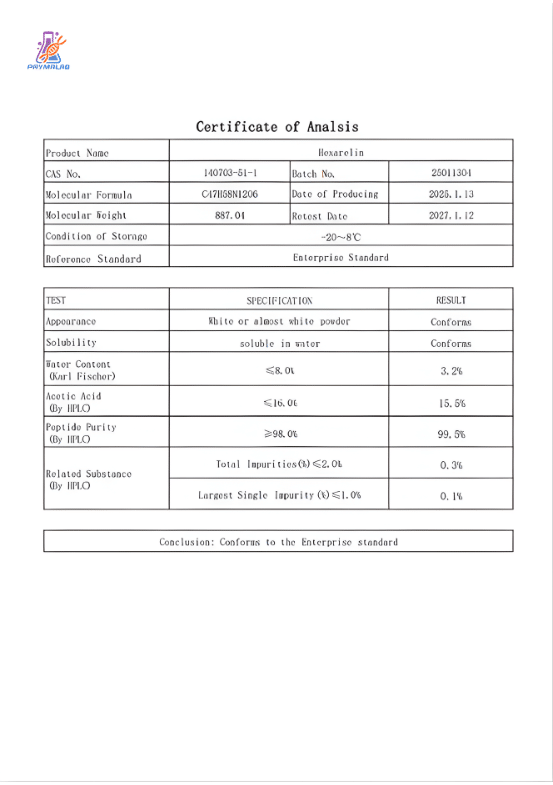
Independent laboratory testing validates Hexarelin 5mg through:
- High-Performance Liquid Chromatography (HPLC) for purity check
- Mass Spectrometry (MS) for cell-level weight and identity confirmation
- Certificates of Test (COA) provided with each batch
- Transparent quality records for research compliance
USA Manufacturing Excellence
All PrymaLab peptides, including Hexarelin 5mg peptide, are manufactured in USA facilities following:
- Good Manufacturing Practice (GMP) standards
- Strict quality control protocols
- Pharmaceutical-grade production processes
- Full batch tracking and records
Optimal Storage and Handling
Hexarelin peptide is stored and shipped under best conditions:
- Heat-controlled storage (2-8°C)
- Light-protected packaging
- Proper handling throughout supply chain
- Shelf life kept from production to supply
Research-Grade Quality Assurance
Each vial contains precisely 5mg of Hexarelin 5mg peptide:
- Accurate measurement for consistent dosing
- Freeze-dried powder for extended shelf life
- Sterile production environment
- Quality-sealed vials for contamination prevention
Same Day, Discreet Shipping
Orders are processed the very same day with:
- Discreet packaging for privacy
- Heat-appropriate shipping methods
- Tracking data provided
- Secure supply to research facilities
- ALL ORDERS DELIVERED IN THREE DAYS TO YOUR DOOR ANYWHERE IN THE US. *Minus holidays*
Expert Support
PrymaLab provides knowledgeable customer support:
- Technical help with product selection
- Dosing and mixing guidance
- Research protocol consultation
- Responsive customer service team
Comprehensive Documentation
Each Hexarelin 5mg peptide order includes:
- Certificate of Test (COA)
- Product specifications
- Storage and handling instructions
- Mixing rules
- Research compliance records
Competitive Pricing
Hexarelin for sale at PrymaLab offers:
- Competitive pricing for pharmaceutical-grade quality
- Volume discounts for larger research projects
- Transparent pricing with no hidden fees
- Exceptional value for the strongest GH secretagogue available
Hexarelin 5mg Peptide Storage and Handling
Proper storage ensures Hexarelin 5mg peptide keeps its potency, shelf life, and research-grade quality:
Lyophilized (Powder) Storage
Unopened vials of Hexarelin peptide in freeze-dried form:
- Heat: Store at 2-8°C (refrigerated)
- Light Protection: Keep vials protected from direct light exposure
- Shelf life: Remains stable for 24 months under proper conditions
- Long-Term Storage: Can be stored at -20°C (frozen) for extended periods
Reconstituted Solution Storage
Once mixed with sterile water, Hexarelin 5mg:
- Heat: Store at 2-8°C (refrigerated)
- Duration: Use within 30 days of mixing
- Container: Keep in original vial with sterile seal
- Freezing: Do NOT freeze mixed solutions (may affect peptide integrity)
Handling Precautions
When working with Hexarelin peptide:
- Sterile Technique: Use sterile technique for mixing and handling
- Contamination Prevention: Avoid touching vial contents or needle tips
- Single-Use Needles: Use fresh, sterile needles for each use
- Proper Disposal: Dispose of used materials according to laboratory protocols
Reconstitution Guidelines
For best Hexarelin 5mg peptide mixing:
- Solvent: Use sterile water (0.9% benzyl alcohol)
- Volume: Often 2-3 mL for 5mg vial (adjust based on desired level)
- Technique: Add water slowly down the side of the vial, avoid direct stream onto powder
- Mixing: Gently swirl (do not shake vigorously) until powder dissolves completely
- Calculator: Use PrymaLab’s Peptide Mixing Calculator for precise calculations
Quality Maintenance
To keep Hexarelin peptide quality throughout research:
- Track storage heat regularly
- Check vial integrity before each use
- Note any changes in appearance (should be clear after mixing)
- Follow expiration dates and mixing timelines
- Document storage conditions for research records
Hexarelin 5mg Peptide: Research Considerations and Best Practices
Researchers working with Hexarelin 5mg peptide should consider these important factors for best research outcomes:
Desensitization Management
As discussed in the cycling protocols section, Hexarelin peptide may show desensitization with continuous long-term use:
- Use appropriate cycling strategies (4-6 weeks on, 2-4 weeks off)
- Consider combining with GHRH analogs to minimize desensitization
- Track response indicators throughout research protocols
- Adjust protocols based on saw responses
Dosing Protocols
Hexarelin 5mg research often involves:
- Multiple daily administrations (2-3 times daily)
- Timing factors (morning, post-workout, before bed)
- Spacing administrations 4-6 hours apart
Stacking Synergies
Hexarelin peptide shows excellent synergy with GHRH analogs:
- Hexarelin + Sermorelin: Cost-effective mix with strong synergy
- Hexarelin + CJC-1295: Maximum sustained GH rise
- Hexarelin + Tesamorelin: Combines maximum GH potency with visceral fat specialization
- Dual pathway start produces greater GH rise than either peptide alone
Individual Variability
Response to Hexarelin 5mg peptide may vary across research models:
- Different models may show varying response to Hexarelin
- Baseline GH status influences response magnitude
- Age, body status, and other factors affect outcomes
- Protocol tuning may be necessary for specific experimental conditions
Comprehensive Effects Consideration
Beyond growth hormone release, researchers should consider Hexarelin peptide’s multi-system effects:
- Cardioprotective properties through CD36 start
- Brain-safe benefits in brain tissue
- Body effects beyond GH-mediated changes
- Possible appetite boost (moderate level)
- These more effects may influence research design and outcome interpretation
Safety and Monitoring
While Hexarelin 5mg is often well-tolerated in research:
- Track relevant parameters throughout research protocols
- Be aware of possible side effects (water retention, appetite changes, etc.)
- Consider heart and neurological tracking given Hexarelin’s effects in these systems
- Follow institutional research rules and safety protocols
Documentation and Reproducibility
For reproducible research with Hexarelin peptide:
- Document exact dosing protocols (dose, frequency, timing)
- Record storage and handling conditions
- Note batch numbers and COA data
- Track cycling protocols and rest periods
- Keep detailed research records for publication and replication
HGH Peptides Before and After: Research Outcome Expectations
Researchers studying hgh peptides before and after outcomes with Hexarelin 5mg peptide can expect many research-dependent results:
Growth Hormone and IGF-1 Changes
Hexarelin peptide produces the most dramatic GH rise among all peptides:
- Immediate Effects: Major GH pulse within 30-60 minutes of use
- Peak Levels: Highest peak GH levels achievable through peptide use
- IGF-1 Rise: Sustained IGF-1 increases with consistent Hexarelin protocols
- Timeline: IGF-1 changes often observable within 2-4 weeks
Body Composition Research
Before and After body makeup changes in research models:
- Fat Mass: Reduction in body fat percentage through GH-mediated lipolysis
- Lean Mass: Increases in lean body mass through anabolic effects
- Visceral Fat: Some reduction, though Tesamorelin 10mg is more specialized for this
- Timeline: Noticeable changes often need 8-12 weeks of consistent protocols
Cardiovascular Research Outcomes
Hexarelin 5mg peptide cardioprotective research shows:
- Cardiac Function: Improved contractility and ventricular function
- Ischemic Protection: Reduced myocardial damage in injury models
- Cardiac Remodeling: Suppressed pathological fibrosis and remodeling
- Timeline: Acute protective effects observable immediately; chronic benefits develop over weeks
Neurological Research Outcomes
Brain-safe hexarelin benefits in research:
- Oxidant Stress: Reduced neuronal oxidant damage
- Neuronal Survival: Enhanced survival under stress conditions
- Cognitive Markers: Possible gains in cognitive function markers
- Timeline: Protective effects observable acutely; functional changes may need extended protocols
Metabolic Research Outcomes
Before and after body changes:
- Glucose Body function: Possible gains in glucose handling
- Lipid Profiles: Changes in lipid body function and profiles
- Body Rate: Increased body rate through GH effects
- Timeline: Body changes often observable within 4-8 weeks
Comparison to Other Peptides
When comparing hgh peptides before and after outcomes:
- Hexarelin: Maximum GH rise, strongest cardioprotective effects
- Tesamorelin: Superior visceral fat reduction (15-20%), see tesamorelin before and after research
- Ipamorelin: Moderate GH rise, selective effects, lean muscle focus
- Sermorelin: Moderate GH rise, cost-effective, foundational research
Order Hexarelin 5mg Peptide Today
Researchers ready to buy Hexarelin 5mg peptide for maximum GH rise, cardioprotective research, or brain-safe studies can order with confidence from PrymaLab. Each vial contains 5mg of pharmaceutical-grade Hexarelin peptide with 99% purity, third-party testing, and full quality records.
Hexarelin 5mg peptide represents the strongest, most potent growth hormone secretagogue available for research, offering exceptional GH-releasing capacity combined with unique cardioprotective and brain-safe properties. Whether conducting maximum GH rise studies, heart protection research, neurological studies, or full growth hormone research, Hexarelin peptide provides unmatched potency and versatility backed by extensive scientific literature.
The full hexarelin benefits profile—including maximum GH secretion, major cardioprotection through CD36 start, brain-safe effects, and body benefits—makes this peptide an exceptional research tool for diverse scientific uses. Combined with PrymaLab’s pharmaceutical-grade quality, USA manufacturing, and expert support, researchers get the highest quality Hexarelin for sale available.
Order your Hexarelin 5mg peptide today and experience the PrymaLab difference: pharmaceutical-grade purity, the strongest GH secretagogue available, full quality records, fast shipping, and expert support for your research success.
COMPLIANCE & LEGAL DISCLAIMERS
IMPORTANT NOTICE:
For Research Use Only: This Hexarelin 5mg peptide is intended strictly for laboratory research purposes only. It is not intended for human consumption, medical use, or any diagnostic or treatment uses.
Not for Human Use: Hexarelin 5mg peptide is not approved by the FDA for human use. It is not a medication, supplement, or food product. Any discussion of research findings or possible uses refers solely to laboratory and scientific research contexts.
Professional Use Only: This product should only be handled by qualified researchers in appropriate laboratory settings with proper safety equipment and protocols.
Age Restriction: Buy is restricted to people 21 years of age or older for legitimate research purposes only.
No Medical Claims: No statements on this page should be construed as medical advice or claims about treating, preventing, or curing any disease or medical condition. All data is provided for research and educational purposes only.
Consult Professionals: Researchers should consult with qualified professionals about proper handling, storage, and research protocols for peptide compounds.
Legal Compliance: Purchasers are responsible for ensuring their research activities comply with all applicable local, state, and federal regulations.
By buying Hexarelin 5mg peptide, you acknowledge that you are a qualified researcher and agree to use this product only for legitimate research purposes in accordance with all applicable laws and regulations.
TECHNICAL SPECIFICATIONS
Product Name: Hexarelin 5mg Chemical Name: Hexarelin Acetate Other Names: Examorelin, HEX Sequence: His-D-2-methyl-Trp-Ala-Trp-D-Phe-Lys-NH2 Cell-level Formula: C47H58N12O6 Cell-level Weight: 887.04 g/mol Purity: ≥99% (HPLC) Form: Freeze-dried powder Vial Size: 5mg per vial Storage: 2-8°C (refrigerated), protect from light Shelf Life: 24 months (freeze-dried), 30 days (mixed) Solubility: Soluble in sterile water Manufacturing: USA, GMP facilities Testing: Third-party verified (HPLC, MS)
RELATED PRODUCTS AND RESOURCES
Researchers interested in Hexarelin 5mg peptide may also consider:
Related Growth Hormone Peptides
- Sermorelin 5mg – Foundational GHRH (1-29) analog for cost-effective GH research
- Tesamorelin 10mg – Specialized GHRH analog for visceral fat reduction (15-20%)
- Ipamorelin 5mg – Most selective GH secretagogue with minimal side effects
- GHRP-6 5mg – Potent GH secretagogue with strongest appetite boost
- GHRP-2 5mg – Strong GH secretagogue with moderate appetite effects
- CJC-1295 – Long-acting GHRH analog for sustained GH rise
Research Tools and Resources
FREQUENTLY ASKED QUESTIONS
Q: What makes Hexarelin 5mg peptide the strongest GH secretagogue? A: Hexarelin produces the highest peak GH levels among all GH secretagogues due to its unique D-2-methyl-Trp change at position 2, which enhances receptor binding affinity and signal transduction. Research consistently shows Hexarelin produces about 2-3 times higher peak GH levels compared to GHRP-6, GHRP-2, or Ipamorelin.
Q: How does Hexarelin compare to Ipamorelin for research? A: Hexarelin is greatly more potent, producing higher peak GH levels, while Ipamorelin offers selective GH release without appetite boost. Hexarelin also provides unique cardioprotective benefits through CD36 receptor start. Choose Hexarelin for maximum GH rise and heart research; choose Ipamorelin for selective GH studies and long-term protocols without desensitization concerns.
Q: Does Hexarelin 5mg peptide cause desensitization? A: Yes, research shows Hexarelin may show desensitization with continuous long-term use (often beyond 4-6 weeks). This is reversible with appropriate rest periods (2-4 weeks) and can be minimized by combining Hexarelin with GHRH analogs like Sermorelin or CJC-1295 for dual pathway start.
Q: What are the cardioprotective benefits of Hexarelin peptide? A: Hexarelin provides exceptional cardioprotective effects through CD36 receptor start, including reduced myocardial necrosis following ischemic injury, improved cardiac function, suppressed cardiac fibrosis, and antioxidant protection. These effects occur independently of growth hormone release, making Hexarelin unique among GH secretagogues.
Q: Can Hexarelin 5mg be stacked with other peptides? A: Yes, Hexarelin shows excellent synergy with GHRH analogs. Popular mixes include Hexarelin + Sermorelin (cost-effective with strong synergy), Hexarelin + CJC-1295 (maximum sustained GH rise), and Hexarelin + Tesamorelin (maximum GH potency with visceral fat specialization). Dual pathway start minimizes desensitization and produces greater GH rise than either peptide alone.
Q: How should Hexarelin 5mg peptide be stored? A: Store freeze-dried Hexarelin at 2-8°C (refrigerated) protected from light. Once mixed, store at 2-8°C and use within 30 days. Do not freeze mixed solutions. Long-term storage of freeze-dried powder can be at -20°C (frozen).
Q: What purity level does PrymaLab’s Hexarelin 5mg peptide have? A: PrymaLab’s Hexarelin 5mg peptide is pharmaceutical-grade with ≥99% purity, verified through third-party testing using HPLC and mass spectrometry. Each batch includes a Certificate of Test (COA) documenting purity and quality.
Q: Where can I find peptide dosing calculators? A: PrymaLab provides a full peptide mixing calculator online. This tool help researchers accurately calculate doses, mixing volumes, and plan research protocols for Hexarelin and all other peptides.
Q: How does Hexarelin compare to Tesamorelin for research? A: Hexarelin produces higher peak GH levels and offers unique cardioprotective/brain-safe benefits, while Tesamorelin specializes in visceral fat reduction (15-20% in research). For maximum GH rise and heart research, choose Hexarelin. For visceral fat and body research, choose Tesamorelin. Both can be combined for paired benefits.
Q: What research uses is Hexarelin 5mg peptide best suited for? A: Hexarelin is ideal for maximum GH rise studies, cardioprotective research (ischemic injury, cardiac function, fibrosis), brain-safe studies (oxidant stress, neuronal survival, hypoxic injury), body research, body makeup studies, and any research needing the strongest GH secretagogue available.












15 reviews for Hexarelin 5mg